Escheat — Not a Bad Word and Great to Find

Go ahead, say it out loud. Escheat.
I know, I know... It sounds like something a six-year-old shouts on the playground right before you grab them by the arm and whisper-yell, "We do NOT talk like that." But I promise, no one's mouth needs to be washed out with soap.
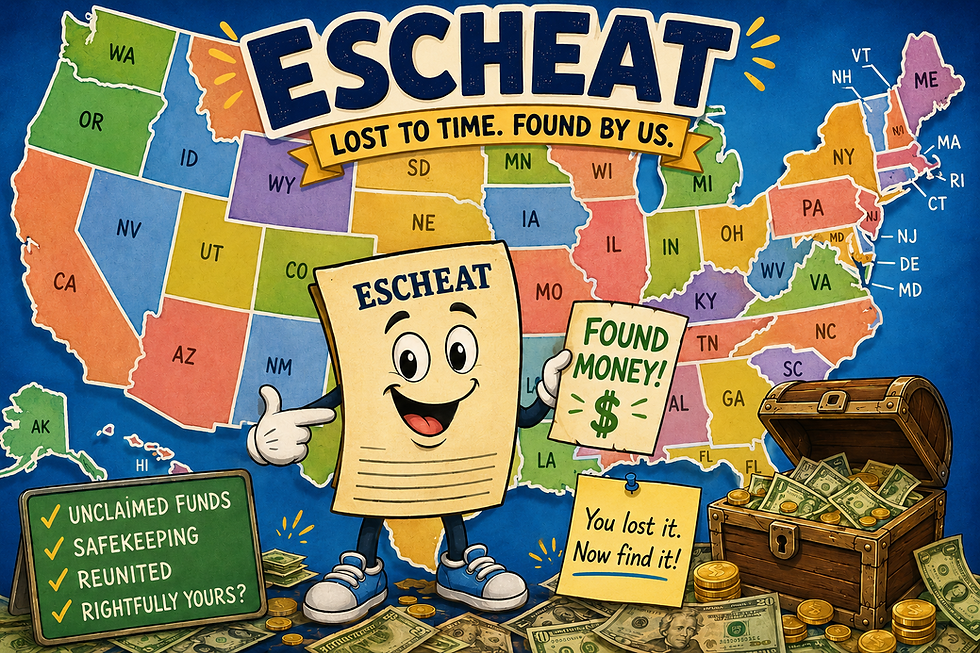
Escheat is actually a legal term for unclaimed property: money, assets, or accounts that have been abandoned and turned over to the state. And here's the kicker: some of it might be yours.
Let me tell you a little story.
A few years back, I first heard about this term from one of my favorite podcasts, Planet Money, (disclaimer, I’m a giver and supporter of them) and had to find out for myself.
I was doing some digging on Florida's unclaimed property database, mostly out of curiosity, the same kind that makes you google your own name at 11PM. I typed mine in, hit search, and my jaw almost hit the floor. There it was, a little over $1,000, just sitting there in the state's database, waiting on me like an old undiscovered Easter egg hiding in your grandma’s bushes outside her house. But this time I was happy to get what was inside out.
At the time I had no idea where it came from. An old account I forgot to close? A company based in Florida where my check had been returned because they couldn’t find me? Honestly, it didn't matter. The process to claim it was straightforward, and a few weeks later, that money was back in my pocket where it belonged.
Here's the thing — this happens more often than people realize. Banks, insurance companies, utility providers, and employers are required to turn over accounts and funds they can't reach you about after a certain period of inactivity. The state holds it — indefinitely — until you come and get it.
So, here's your homework:
Live in a state now or in the past? Check that state's unclaimed property database. Most states have their own portal so look it up. Don't skip states you moved away from. That old apartment deposit isn't going to find you.
Have accounts, policies, or old employers in multiple states? Check every single one. There's no expiration on claims in most states.
Are you an executor settling an estate? This is critical. Before you close out someone's estate, run their name through every state they lived in. Unclaimed property can be part of the estate, and missing it could mean leaving money on the table — or worse, costly legal headaches down the road.
The government isn't going to send you a congratulations card. They're perfectly happy holding onto your money forever. But the database is free, the search takes two minutes, and the payoff could be a whole lot more than you'd expect.
If you find your long lost pot of gold at the end of the rainbow let me know, I love hearing success stories!
So go check. Right now. Before the word "escheat" goes from sounding like something you'd scold a kid for saying — to sounding like the best thing you've heard all year.
The opinions voiced in this material are for general information only and are not intended to provide specific advice or recommendations for any individual or firm.
Past performance is no guarantee of future results. Securities and Advisory Services offered through LPL Financial, a Registered Investment Advisor. Member FINRA/SIPC.


Comments